
Экскурсия в Музей полиции
Наталья Юрьевна Ощепкова — опытнейший сотрудник музея истории пермской полиции, более 30 лет посвятившая себя службе в МВД. Рассказ о сотрудниках органов внутренних дел является личными воспоминаниями, многих, о ком рассказывает Наталья Ощепкова, она знает лично. Есть среди героев, внесших внесли огромный вклад в развитие правоохранительной службы Прикамья, и ее ученики.
24 февраля музей посетили студенты из Китая, Марокко, Узбекистана, Туркменистана и Таджикистана, обучающиеся в пермских вузах: ПГГПУ, ПГФА, ПГНИУ, ПГАТУ, ПГМУ.
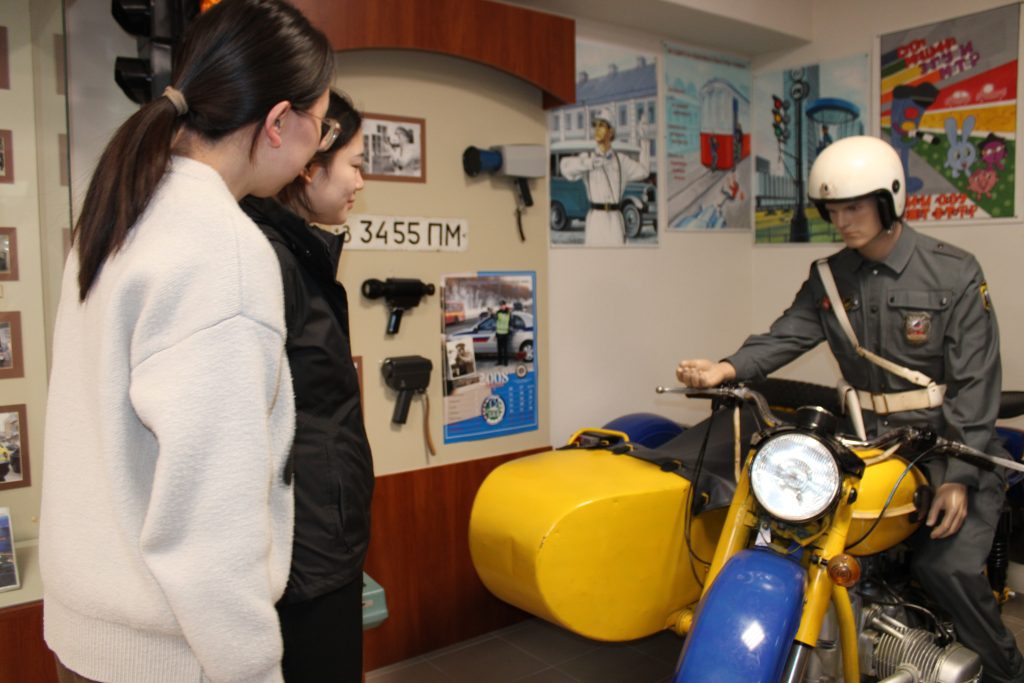
Студенты узнали об этапах развития и создании современной полиции, ее подразделениях и о том, как менялись методы работы сотрудников милиции, затем полиции, их техническое оснащение и виды транспорта.
Интересные факты:
Программа » Сова-2″ — это занесение автомобильных номеров в компьютер и установление камер для их распознавания — была разработана здесь, в Перми, и успешно внедрена во всех городах России.
До 1973 года в каждом городе были свои (разные) правила дорожного движения, потом создали единый свод правил для всей страны.
Некоторые цифры:
Фонд музея насчитывает более 1,5 тысячи экспонатов, среди которых — личные вещи сотрудников и ветеранов, документы, награды и нагрудные знаки, форменное обмундирование разных лет, специальная техника и приборы, фото и видеоматериалы.
⠀
6,5 тысяч участников Великой отечественной войны служили в милиции Прикамья. В настоящее время остался только один ветеран — Бронников Аркадий Георгиевич.
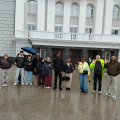
Общее фото со студентами: в «Зале Славы», посвящённом сотрудникам органов внутренних дел Прикамья, погибшим при исполнении служебных обязанностей.
Экскурсия организована в рамках акции «Именем Героя» при содействии ГУ МВД России по Пермскому краю.
⠀
ENG
Natalia Oshchepkova is an experienced worker of the Perm Police History Museum, having worked in the Ministry of Internal Affairs for over 30 years. Information she shares is not read in books. Natalia Yurevna personally knows everyone she talks about during the excursion. Many of her students have become esteemed people and have made a significant contribution to the development of law enforcement service in the Perm region.
Students from China, Morocco, Uzbekistan, Turkmenistan and Tajikistan, studying at Perm State Humanitarian and Pedagogical University, Perm State Pharmaceutical Academy, Perm State National Research University, Perm State Agro-Technological University, and Perm State Medical University visited the museum.
They learned about the stages of creating modern policing, its subdivisions, and how the methods of law enforcement officers, police technical capabilities and transport means have changed over time.
Interesting facts:
Sova-2 program involves entering vehicle license plates into a computer and installing cameras for their recognition was developed in Perm and implemented in all cities of Russia.
Until 1973, each city had its own traffic rules, and then a unified set of rules for the entire country was created.
Some statistics:
The museum’s collection includes more than 1,500 exhibits, among which are personal belongings of police officers and veterans, official records, awards and badges, uniforms of different years, special equipment and devices, as well as photo and video materials.
6,500 participants of the Great Patriotic War served in the militia of the Perm region. At present, there is only one veteran left — Arkady Georgievich Bronnikov.
A group photo with students: in the Hall of Fame dedicated to the Kama region law enforcement officers who died in the line of duty.
The excursion took place as part of the ‘In the Name of the Hero’ campaign with the support and assistance of the Main Directorate of the Ministry of Internal Affairs of Russia for Perm Krai.